


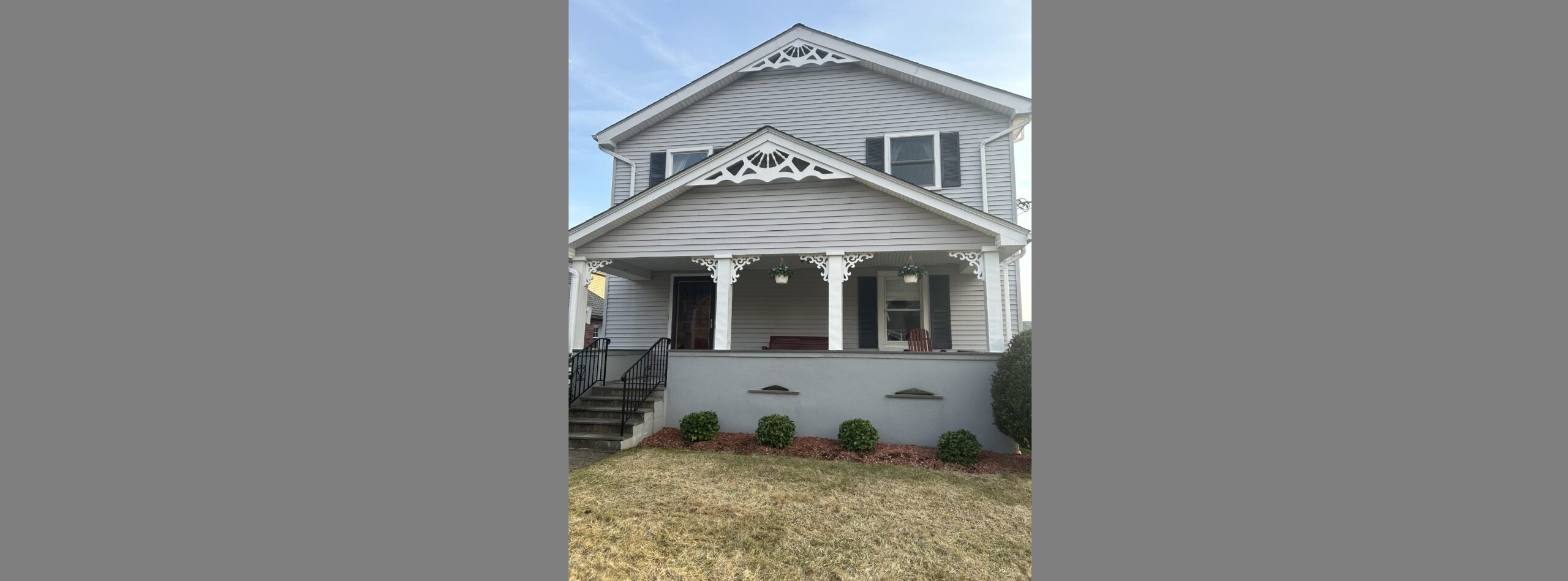
My wife and I bought our home in 2013 using a $417,000 30-year mortgage at a fixed rate of 4.625%. In 2020, we paid it off 23 years ahead of schedule, saving about a quarter of a million dollars in interest.
Owning our home without a monthly payment provides tremendous peace of mind. There’s a lot of “sleep at night” value associated with not worrying about those payments. Our shelter is secure even if I lose my job or the stock market tanks, you name it.
What worked for us understandably isn’t an option for everyone — and it admittedly required some thoughtful sacrifices on our part to make it happen — but if you can swing it, here’s what you stand to gain beyond those restful nights of sleep.
Let’s run the numbers
The savings sound impressive, but many financial experts would mathematically push back on our decision, pointing out that 4.625% is a relatively low cost to borrow money. Instead of paying off our mortgage early, some would say we should have invested the extra money in the stock market where historical returns have averaged about 10% a year.
But besides the peace of mind (which is considerable), the opportunity math works out better than some might think. Consider that we can now afford to take more risk with our investments. My wife and I are in our early 40s, and our retirement plans are invested 100% in stocks. The conventional wisdom says your stock allocation should be 100% minus your age, or perhaps 110% minus your age given that people are living longer these days. Under that guidance, we should be invested about 60%-70% in stocks with the remainder in safer instruments like bonds and cash.
But we can push the pedal to the metal with a riskier (and, we hope, more rewarding) stock allocation in part because our mortgage is paid off, which removes considerable risk from other parts of our financial lives. The stock market is inherently risky in the short term, but historically rewarding in the long run. You could lose money in stocks today or this month or even this year, but over a time horizon of 10 years or longer, it’s virtually certain you’ll come out ahead.
Beyond the long-term benefits, being mortgage-free also means we’re able to spend more freely on short-term opportunities, such as travel and after-school activities for our kids. If we still had a hefty monthly mortgage payment, we wouldn’t be able to do all those things.
Lastly, because our housing is secure, we can get by with a smaller emergency savings fund, freeing up that money for other long- and short-term opportunities. The standard advice is to have three to six months’ worth of expenses in the bank. Without a $2,000+ monthly mortgage principal and interest payment, that’s $6,000 to $12,000 less that we need to incorporate into our rainy day fund.
The hidden costs of homeownership persist
We aren’t completely free from housing costs, of course. For starters, there’s the pesky issue of property taxes. We live in a New York suburb with high property taxes (approximately $20,000 per year, or an average of about $1,667 per month). We also pay roughly $2,800 a year ($233 a month) for homeowners’ insurance. And there are the inevitable maintenance issues. This winter, for instance, we needed several thousand dollars’ worth of plumbing and heating repairs, plus a new dryer.
Because of the hidden costs of homeownership, our housing isn’t completely free even though we paid off our mortgage. Still, doing so created a lot of room in our monthly budget for those other costs of homeownership. If we’d kept our 30-year mortgage, we’d be paying $2,144 per month in principal and interest, plus another roughly $1,900 in property taxes and homeowners’ insurance for a grand total of about $4,000 per month in housing costs (not including the more variable expenses of maintenance and repairs).
Eliminating our mortgage lowered our monthly housing payment by half. That’s like living in the New York City area but paying the housing costs of a much more affordable town in the South or Midwest.
So how, exactly, did I manage to pay off my mortgage early?
We were fortunate to be in a position to pay off our mortgage as quickly as we did. The breakthrough event came in 2017 when Bankrate was acquired, accelerating the vesting of several years’ worth of stock options. I used most of that money to recast our mortgage.
With a recast, a little known cousin of refinancing, you put a lump sum toward your mortgage principal and the lender recalculates your remaining principal and interest fees over the existing term at the existing interest rate. I put $250,000 into a mortgage recast, lowering my mortgage payment by $1,400 per month. It was a quick and easy process. I paid a one-time $250 fee and filled out a short form.
Refinancing, on the other hand, involves taking out an entirely new loan. It’s a popular tactic when mortgage rates fall since refinancing pays off your old loan and gets you into a lower-rate product that reduces your monthly payments.
I preferred the recast for several reasons.
- Rates were actually a bit higher than our original loan when we did the recast in 2018.
- I didn’t want to restart the clock on another 30-year loan, or even a 15-year mortgage.
- I didn’t want to deal with refinancing’s considerable paperwork, closing costs, appraisal fees or other rigamarole.
In 2018, we didn’t have enough money to completely pay off the mortgage, but we knew we would benefit from the lower monthly payments resulting from the recast. And I figured that we could pay off the remaining mortgage principal in two or three years if we were disciplined about paying a bit extra from time to time. For example, by putting extra money in when we got a tax refund or a bonus. Or by paying more when our cash flow allowed for it, including the idea of trying to stick with the old payment at least some of the time, even though the recast meant we could pay $1,400 less that month.
We didn’t keep up with the Joneses
One thing we didn’t do: Trade up to a more expensive home. Our income has risen substantially since we bought our house in 2013 (of course, many of our expenses have risen substantially as well — having a couple of kids will do that to you). Still, on paper, at least, we could qualify for a mortgage on a much more expensive property.
We have resisted the temptation. We got off the treadmill of monthly mortgage payments, and we don’t want to get back on it. We also genuinely like our home and have customized it in various ways over the years. Is it the fanciest house in the fanciest neighborhood? Hardly. But it suits us.
The math behind mortgage prepayments
If you’re enticed by the idea of becoming mortgage-free ahead of schedule, consider this mortgage prepayment example.
Even making just one extra monthly payment a year can trim a 30-year loan into a 24-year payback cycle.
If you borrowed $400,000 for 30 years at a fixed rate of 6.44% (the current average, according to Bankrate), your monthly principal and interest payments would be $2,513. Paying an extra $2,513 in principal each year retires the loan almost six years early and saves nearly $110,000 in interest. That’s incredible, and it shouldn’t be that difficult to do.
If you get paid every two weeks, there are two months every year when you receive three paychecks. Consider putting some or all of that money toward your mortgage principal. You could also consider using other found money such as tax refunds, bonuses and gifts. Taking on a side hustle is another great way to drum up some extra cash. As is looking for ways to cut your expenses and wringing some extra savings out of your monthly cash flow.
The bottom line
To be clear, paying off a mortgage ahead of schedule is a luxury. If you have credit card debt at 20% interest and a mortgage at 6%, put your extra money toward the credit cards. If you have a dangerously low emergency savings cushion, save for a rainy day before prepaying a 30-year loan.
But if you have a little extra money now or in the future, prepaying a mortgage provides tremendous peace of mind as well as tangible financial benefits.
Have a question about managing your money? E-mail me at [email protected] and I’d be happy to help.
Why we ask for feedback
Your feedback helps us improve our content and services. It takes less than a minute to
complete.
Your responses are anonymous and will only be used for improving our website.
Help us improve our content
Read the full article here